
Field Note: Inside the Labour Machine
This isn’t a theory. It’s a field note from inside the Labour Party machine — what I saw, what I learned, and what we need to rebuild if progressives are going to win. The point isn’t to moralise about past failures, but to stop repeating them otherwise risk the rise of far-right power in the UK.
This is a warning and a blueprint for any political organisation that wants to stay human and shape the conversation while it grows.
THE PROBLEM OF BUSYNESS
If it’s not communicating, it’s not comms. What I saw inside Labour’s comms machine explains why so many campaigns mistake activity for impact.
The system ran itself. Nobody ever stood back and asked what was really going on. Every week was packed — visits, press ops, travel, scripting, edits, posts. Everything looked urgent. Everything felt vital. But very little connected and certainly wasn’t strategic.
We weren’t communicating. We were performing communication. Busyness had become the goal. Meetings, motion, updates — a thousand moving parts. It gave everyone the illusion of progress through outputs while the core question — is any of this landing? — went unasked.
THE CULT OF THE VISIT
One ritual summed it up: the visit. Visits were organised by one team, scripts written by another, timetables drawn up somewhere else. Completely uncoordinated.
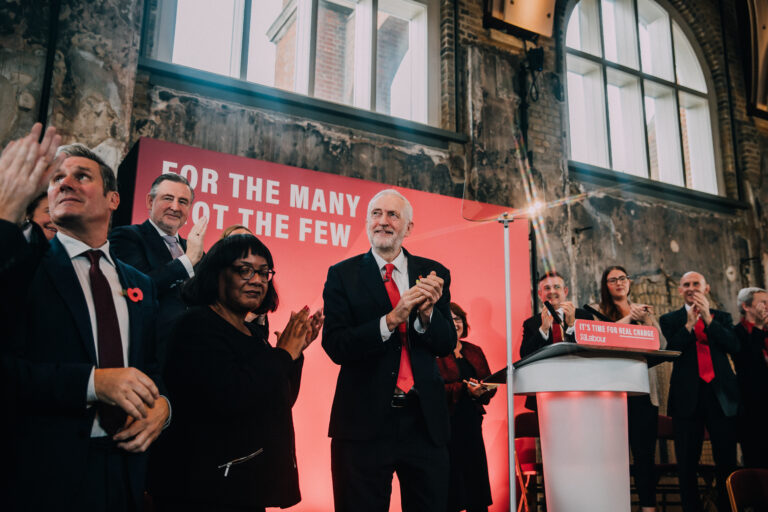
We had something called the grid — every hour broken into fifteen-minute chunks. Twenty people on the road to a steel yard, a care home, a community centre, a street where something had happened. Four hours of nodding, shaking hands, getting B-roll.
Then, near the end, a piece to camera with Jeremy. Sometimes improvised, sometimes fed from an auto-prompt with a script he’d never seen. We’d race back, edit the film overnight, push it out the next morning. One more output.
I’d read the comments — even the die-hard fans were bored. Nobody loved them, nobody hated them, they just washed past.
These were self-initiated projects. Jeremy wasn’t involved. He probably assumed it was his duty to make them. Everyone else probably assumed the same. So we kept making them. Nobody ever talked about them. That’s what we did for two years.
At least we looked busy.
It's time Britain got the health service it deserves. A Labour government will properly fund our NHS, will train nurses, invest in staff and make mental health a priority. Vote Labour to save our NHS.
— The Labour Party (@UKLabour) December 12, 2019
Polls are open until 10pm👇https://t.co/bSsEK7a3xL pic.twitter.com/8BWP6UTEX4
If you want more pieces like this, I write two sharp posts a month.
Sign up here.
Thank you!
You have successfully joined our subscriber list.
THE ILLUSION OF IMPACT
The busier we looked, the less anyone noticed that nothing we made was changing minds; that the comms wasn’t communicating with the people we needed to reach.
The other kind were the reactive pieces — firefighting films, “response” threads, the ship-is-sinking stuff you throw out when you’re under attack. They felt urgent, noble even, but they changed nothing.
We never asked what landed? or what missed? There were no feedback loops, no learning, no reflection. Looking back, we should have been asking more questions, adapting, and thinking about how we strategically shaped the narrative.
Instead, success was measured by volume — the number of posts, the length of the grid, the sense that we were doing something. Even if something was a lot of nothing.
The machine doesn’t care whether it works. It just wants to move.
WHEN COMMUNICATION DIES
The party-political broadcasts were an opportunity to shape the narrative. Sometimes they resonated with people, offering hope and opportunity, but they were too often unstrategic and lacking coordination. Scripts knocked together at the last minute. No insight, no story, no blood.
Jeremy’s diary had little availability. There was a firewall between the creatives, the strategists, and the people who managed his diary. The last in the food chain were always the creatives — the people who could have brought it to life.
For Jeremy to sit down with writers would’ve been uncomfortable — dangerous even. So we avoided it. Everything I’m describing was a well-oiled ritual.
Ritual, ritual, ritual.
The machinery of communication long after communication itself had died.
THE FEAR BEHIND THE RITUAL
It was all built to protect the leader from the danger of asking, what the hell are we doing?
From the danger of creativity, of reflection, of anyone stopping long enough to notice the emptiness of the ritual.
The whole structure existed to keep things moving so nobody had to think. That’s how machines protect themselves — with motion. And that’s what we mistook for work.
FRONT FOOT AND BACK FOOT COMMS
Most political comms live on the back foot. Reactive, defensive, firefighting — always responding to someone else’s move. As Ronald Reagan said, “if you’re explaining, you’re losing”. Every attack gets a rebuttal, every outrage gets an explanation, every lie gets a thread. It feels righteous. But it’s really submission disguised as duty.
George Lakoff told us not to think of an elephant because when you reply to a false frame, you confirm it. You validate your opponent’s story just by repeating its terms. You spend your energy cleaning the mess they made, never building a world of your own. That’s how movements shrink — trapped inside enemy language, defending themselves with borrowed words.
Whereas front-foot comms is authorship. It’s deciding what the week’s conversation is before anyone else does. It’s building a frame so strong that your opponents have to step inside your story just to attack it.
Back-foot comms says, “We’re not what you say we are.”
Front-foot comms says, “This is who we are, and this is what the fight’s about.”
One defends reality. The other defines it. In the Labour Party, we never made that shift. We stayed reactive — always explaining, always late, always behind the narrative curve. We were being played by the machine we were supposed to be running. This has to change.
SO WHAT?
This isn’t just a Labour problem. Every movement that forgets to ask why ends up repeating this same ritual — all motion, no meaning. It’s what happens when institutions start thinking for you.
But here are some of the ways I think progressives can do better.
This isn’t a theory of perfection. I’ve never worked inside an institution that got it fully right. But I’ve seen flashes — moments when it was right. Moments when story, strategy, and leadership moved together.
What follows isn’t nostalgia. It’s extrapolation — a guide for guerrilla warfare against the machine. Built from the fragments of what worked. The goal isn’t to build a new machine. It’s to keep the human pulse beating inside the old one.
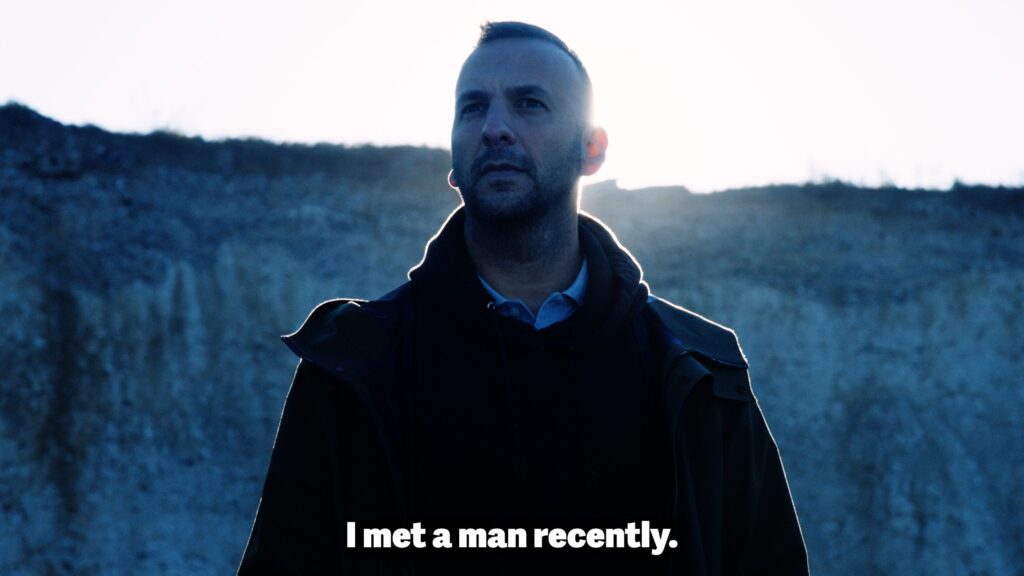
WHAT TO DO ABOUT IT: A FIELD MANUAL
- DISRUPT BUSYNESS
Busyness is control disguised as duty. The full diary looks like strength, but it’s weakness dressed as productivity. A leader who’s always busy isn’t leading — they’re reacting. They’re being scheduled by events, by staff, by optics. Every meeting, every visit, every photo op becomes a tiny act of surrender dressed as service.
We must reclaim time for reflection, for meaning, for authorship. One immovable two-hour slot each week — narrative and meaning only. No logistics. No updates. Just intent, story, and truth. That’s where leadership starts — in stillness, not speed.
- THE LEADER’S INTENT
Leadership isn’t reacting to events; it’s writing the story the world reacts to. If you don’t decide what the week means, the world will decide it for you. Intent is authorship. It’s the moral and emotional direction behind everything else. Without it, you’re just a spokesperson for circumstance.
- ACCESS — WHO GETS TO SHAPE MEANING
Gatekeepers protect the leader from risk — and therefore from truth. They filter out discomfort, and with it, imagination. Storytellers need direct access, not filtered briefings.
Protection without connection equals isolation. Every layer of “protection” adds distortion until the story that reaches the leader isn’t the one being lived by the people. If the storytellers can’t reach the source, the source goes blind.
- FRONT FOOT COMMS
Front foot comms isn’t spin. It’s authorship. It means defining reality before your opponents do. It’s not “positive messaging,” it’s strategic meaning-making — choosing what matters and making it felt.
Front foot comms starts with the question: What’s the frame we want the world to see through this week? Then every piece of communication — speech, film, tweet, interview — builds that frame in human terms.
Reactive comms spends its life saying no to other people’s stories. Front foot comms builds its own story, and forces everyone else to respond.
The political right have taken strides forward in setting the agenda with front foot comms. It’s time we put both progressive feet forward.
The rule is simple: If you’re not setting the frame, you’re trapped in someone else’s.
- CREATIVES — FROM LAST TO FIRST IN THE FOOD CHAIN
Creatives aren’t polishers; they’re pathologists of meaning. They test whether an idea breathes before it’s released. Their first question is never, “Can we make this look good?” but, “Does this feel human?” If the answer’s no, stop there.
No amount of design, production, or polish can revive a dead idea. Put them first in the room, not last in the chain.
- THE MISSING FEEDBACK LOOP
Measure resonance, not reach. Look at what’s ignored, not just what’s liked.
Hold a post-mortem of the flop every week. Ask: what did we assume that wasn’t true? What did people feel — or not feel — that we didn’t see coming?
Ask whether our messages and messengers are connecting with the people we need on board? Are we speaking to ourselves or applauding self-serving agreeable content? Are we producing outputs to hit KPIs and targets, or are we making an impact?
We can learn, reflect and adapt continuously. There are people and resources out there at the forefront of storytelling, messaging and communications. I’ve included some useful signposts to others at the bottom of this blog. Because reflection isn’t decoration. It’s survival.
- THE QUARTERLY SACRIFICE
Every few months, kill a ritual that’s stopped working. Feed the machine to itself. Cut the dead weight — the sterile visits, the pointless statements, the safe formats. Replace them with experiments. Test; learn. repeat.
A live, unscripted conversation instead of a speech. A film that shows doubt instead of certainty. Renewal through destruction. That’s how you stop the machine from rebuilding itself.
THE DAILY FIGHT
Communication is the nervous system of a movement. When it dies, the body still moves — but it’s already dead. Meaning-making is the blood; reflection is the breath. The machine will always try to reclaim control.
Don’t let it.
If it’s not communicating, it’s not comms.
###
A few useful resources on front-foot comms:
Do Something, Anything newsletter by Paul De Gregorio
Boost your communications impact – boxset of video content by Jonathan Tanner giving you the tools, knowledge and impetus to drive front-foot comms.
Resources by New Economy Organisers Network including guides on messaging and framing on key issues.
If it doesn’t communicate, it isn’t comms
Two sharp blog posts a month — sign up or miss out.
Thank you!
You have successfully joined our subscriber list.