
Running with Zack
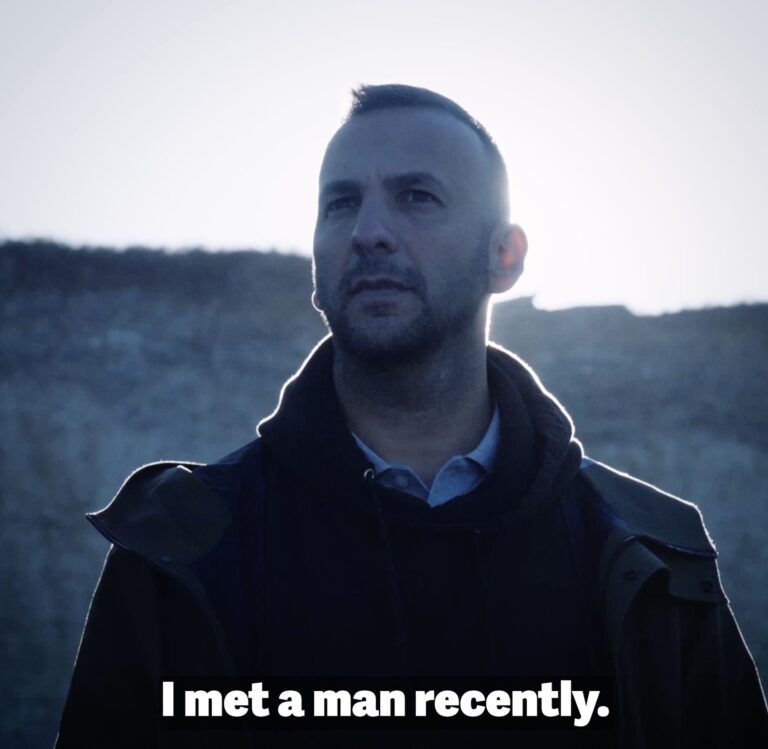
A message came in from Zack’s comms team, a little out of the blue. They needed a follow-up film, and another Party Political Broadcast. All they really knew at that point was the brief: the cost of living. That was it. They asked if I could write something. The only problem was time. They needed it fast; ten days.
I remember a flicker of anxiety straight away. The last film had travelled a long way, twelve million views on Twitter alone, real cut-through, and I’d quietly assumed there would be more space before the next one. More time to let the dust settle. Instead it was straight back in, under pressure, with very little margin for getting it wrong.
The question wasn’t how to top the previous film, because that’s a fool’s game. It was how to avoid repeating it. How not to slide into something recognisable or procedural. How to say something that actually landed, something people already felt. Cost-of-living films are everywhere and people by and large know the facts. The danger wasn’t saying too little. It was speaking to the head and missing the heart and body entirely.
Scroll down to keep reading. And if you want more pieces like this, I write two sharp posts a month. Sign up here.
Thank you!
You have successfully joined our subscriber list.
Looking for a Way In
By day three I’d only sketched out a handful of ideas, and none of them held. They all felt like commentary. Afterall, who were we to comment on the grind people were trapped in? We would be standing out of it and describing from a safe distance. The real problem was finding a way into what it actually felt like, rather than explaining it back to people who were already living it.
It was during a conversation on day three of the project, with Zack and G, that someone used the phrase “falling behind”. It wasn’t pitched. It wasn’t framed. It was just said in passing, the way people say it when they’re trying to name something they’re inside rather than analyse it. I wrote it down on my notepad without really knowing why at the time. When I came back to it later, it was still there, still doing something. It had weight.
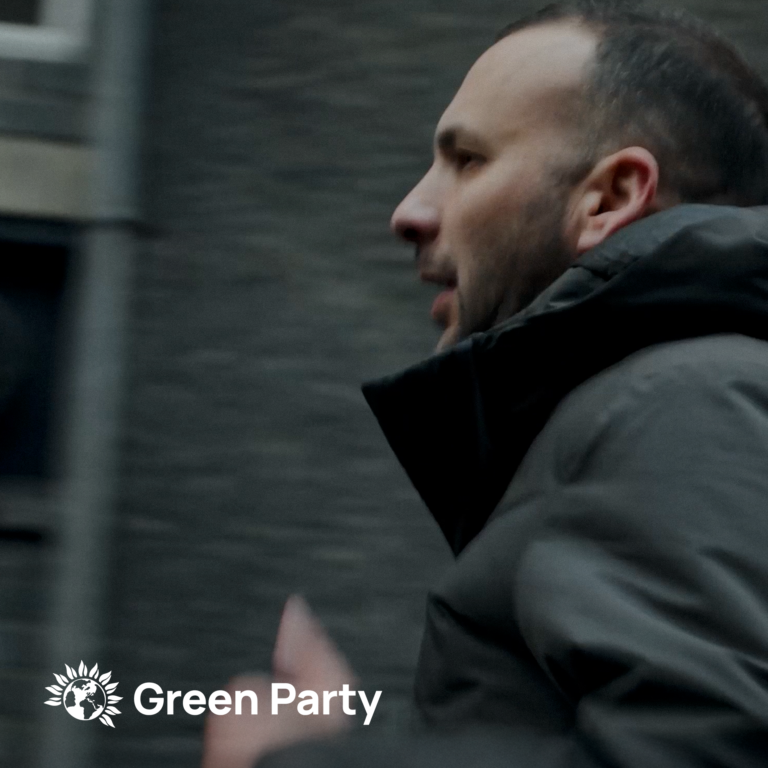
Then an image arrived. What if Zack was running to catch the camera but couldn’t keep up? What if he was literally falling behind? I dismissed it almost immediately. It felt ridiculous. MPs don’t run in cost-of-living films. That’s not what these things look like. That film doesn’t exist, so it must be wrong. The sort of thinking dictated by norms of what we’re told can and can’t be done.
But this thought wouldn’t go away. I knew Zack had to run, but I couldn’t yet say why. I knew it sounded odd. I knew it would raise eyebrows. And I knew this much; if I was going to ask him to run, to deliver lines while out of breath, exposed, carrying urgency in his body, I’d better have a bloody good reason why.
Trying to find that reason, under pressure, and explain it to a team rightly cautious and aware that Zack had already taken serious right-wing flak for running on camera before, is where the film actually took shape.
Why Is Zack Running?
The first thing that became clear was this: the running couldn’t be decoration. It couldn’t sit on top of the words. If it did, it would feel false immediately. So the running had to do something. It had to change the way the film spoke. Once we accepted that, everything else followed.
When you’re running, you don’t speak in long sentences or make protracted arguments.
You speak in bursts.
You list things.
You stack problems.
You register pressure before you interpret it. Breath shortens, so sentences shorten. That’s not a stylistic choice, it’s just what bodies do under strain. That’s why the first half of the script behaves the way it does.
“Rent’s up. Water bills up. Fuel hikes.”
Those lines aren’t fragments because we wanted them to sound punchy. They’re fragments because that’s how thought works when you’re tired and trying to keep up. There’s no explanation yet, no theory, just accumulation. Pressure piling on pressure. If we’d started explaining too early, it would have felt like a lecture. Recognition and feeling had to come first.
Running also collapses time. There’s no future plan when you’re trying not to fall behind. It’s just here and now. That’s why lines like “trying to bridge a gap that doesn’t close” matter. They describe motion without progress, effort without relief, without ever needing to spell it out.
Only once that state is established does the film widen. Not to make a point, but to confirm a pattern. North and south. Cities and towns. Electricians, nurses, students, grandparents. This isn’t box-ticking. It’s saying: if you feel this, you’re not imagining it. It’s the weather we’re all experiencing.
The stop only works because of all that.
When Zack stops running, it isn’t a twist. It’s a release. The body finally does what the audience has been waiting for permission to do. Breath returns. Sentences lengthen. Cause and effect become possible. For the first time, the film is allowed to explain why things feel the way they do.
That shift isn’t rhetorical. It’s physical. The camera overtakes him. Focus changes. Authority moves from effort to clarity. You’re not being told what to think. You’re being shown what happens when the pressure lifts enough for thinking to begin.
That’s why the film doesn’t feel like a speech. It doesn’t end with a flourish or a promise. “This is how we make hope normal again” isn’t a victory lap. It’s a condition. It says: if we change how things are organised, people can stop running just to survive.
That was the reason. Not symbolism. Not style. Running shaped the language. The language justified the running. Once that loop locked into place, the film became inevitable. And that’s when I knew it was right.
Making It Real
I explained some of this, cautiously, as we went. Not as theory, but as pressure. We tightened the script line by line. Cut anything that sounded like commentary. Kept anything that sounded like breath. Gradually, almost without deciding it, the running stopped being an idea and became reality. Once it was there, nothing else made sense.
The Day It Was Shot
We filmed it all on one wet Sunday in Croydon. Partly because it was practical, I do live there, but mostly because it felt right. The place carried the mood without trying. Grey, compressed, ordinary. Oppressive in the way everyday life is oppressive now, but still full of movement, still full of people pushing and fighting their way through.
The weather did half the work. The pavement did the rest.
Zack ran between locations. No spectacle. No closed streets. No crew fanfare. Just wet pavements, traffic, people getting on with their lives. His coat stuck. Breath showed. The strain stayed in. The interruptions stayed in. That wasn’t atmosphere. It was the condition.
Nothing about that day felt symbolic while we were in it. It just felt ordinary. Pressured. Slightly rushed. A bit uncomfortable. Which, in retrospect, is exactly why the film works. It wasn’t staged to represent something. It was made inside the thing it was talking about.
By the time we rolled, there was nothing left to prove. The reasoning had already happened. The body just had to do the thing the country is already doing every day.
What That Leaves You With
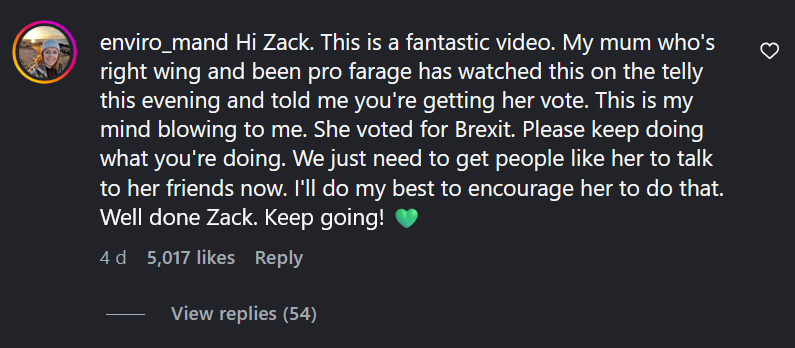
And that, ultimately, is why the film works. Not because it’s clever, new, or repeatable, but because it didn’t start with a format at all. There was no template to follow, no cookie-cutter, agreeable political shape built around projected commentary. It started with a condition, followed it honestly, and let the form grow out of that.
That kind of work doesn’t have to be expensive or elaborate. We shot it on the road and turned it around in nine days. No safety net. No polish pass. Just attention, pressure, and a refusal to smooth the thing into something familiar.
Which leaves me with this thought for you:
Film is powerful not because it can be repeated, but because it can’t.
If it doesn’t communicate, it isn’t comms
Two sharp blog posts a month — sign up or miss out.
Thank you!
You have successfully joined our subscriber list.