Going Off Script
Part One: The Felt Logic
The lost client
I lost a client recently. Or at least, I felt one beginning to drift away. No dramatic argument, slammed doors or furious emails. Just silence after a ninety minute call.
He came prepared. Policy documents, links to leaflets, his website, the full platform. And something in all of it wasn’t chiming for me. So I kept interrupting him. Pulling him away from the material he’d brought. Following something I couldn’t name.
This blog is my attempt to name it.
What I was up to, I think, was a struggle. Between an instinct I’ve been slowly learning to listen to. And a set of assumptions about political communication I’ve spent twelve years learning to deeply distrust.
Why nobody is listening
Most clients arrive with a set of assumptions about how political communication works. Boxes to tick. Messages to land. Appeals to reason. Shopping lists of things they’re going to fix. And I understand it, they have a lot to say. The problem is the people they’re trying to reach have, entirely reasonably, stopped listening. Years of broken promises, ignored communities, politics that arrives at the door every five years and disappears again. The distrust is deep and it didn’t happen overnight. You’re not addressing a rally. You’re interrupting someone who has already, quietly, decided that none of this is for them.
So I badger my clients off the road. Out of the premeditated responses, the well-worn phrases, the neural pathways carved by years of being a public person. I’m trying to get them somewhere unscripted. Into the human stuff underneath.
The dithering was it
Because modern professional culture is trained to recognise visible productivity. Bullet points, strategy decks, scripts, drafts, timelines, outputs. Whereas my process, especially in the early stages, looks deeply non-sequential. Wandering conversation. Circling. Long pauses. Following emotional threads that seem to have nothing to do with the brief. Sitting with uncertainty.
There’s usually a point, somewhere around the third Zoom call, where clients begin wondering whether I am making a film or accidentally starting a slightly emotional podcast.
But that confusion is usually the sign we’re close to something. The dithering wasn’t wasted time. It was the work.
The emotional frequency appears first. Structure follows afterwards.
Part Two: The Example
Zoë Garbett
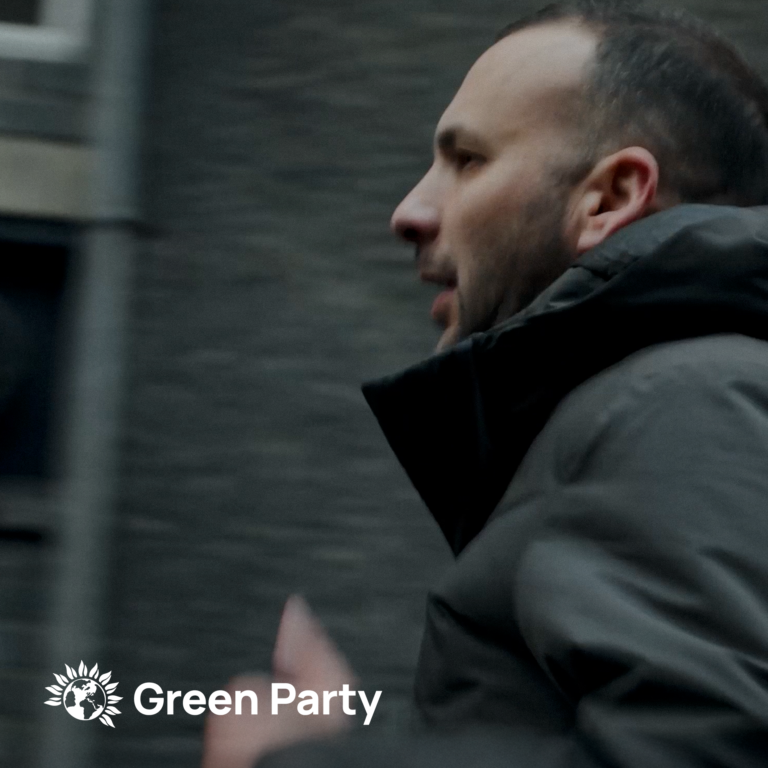
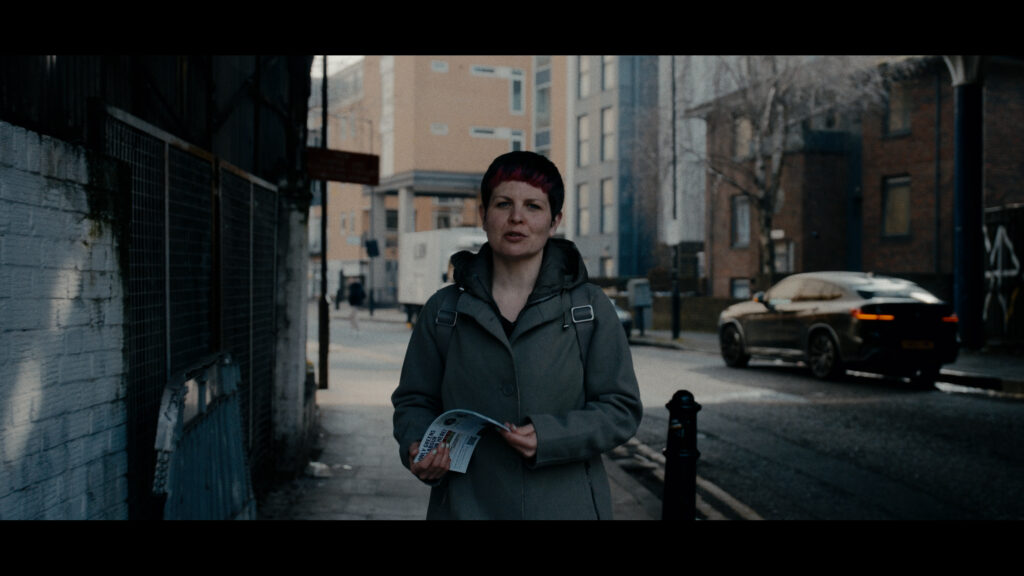
Earlier this month I made a film for Zoë Garbett, who was standing to be Green Party mayor of Hackney. Most people thought it was a long shot. It’s a good example of productive dithering in action. Though I’d drop the word productive if I could find a better one. It makes the thing sound more deliberate than it is. More like a method than a disposition.
When I first sat down with Zoë she was fresh from weeks of canvassing, careful, on message, plans and priorities. Everything you’d expect from someone who has spent twelve years in public life learning how not to put a foot wrong. So, as usual, I had no plan. We just kept talking, kept listening. And somewhere in the conversation we started finding our way off script. Into the harder stuff. What’s it actually like, turning up to strangers’ doors? How does it feel, selling a vision to people who are tired?
A door in Dalston
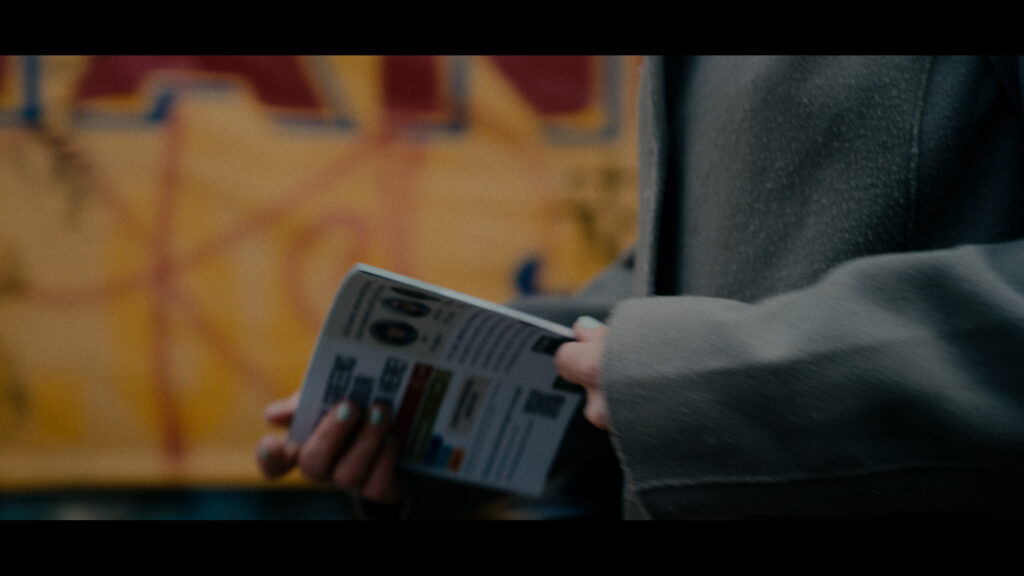
After a while she started talking about a door in Dalston she’d knocked on. A young mother standing there with kids at her feet, holding one of Zoë’s leaflets, turning it over in her hands like she couldn’t quite bring herself to look at it. How to break that silence. Zoë had asked: “Do you feel let down?” And the woman had said: “Yeah. I just don’t see the point of all this.” Zoë was about to launch into the normal pitch, the plans, the policies, the reassurances. But something in the woman’s face stopped her.
When Zoë told me that story we both felt it immediately. There was no discussion. It announced itself. Not the right anecdote. The right frequency. And because it was already true for Zoë, not a story she’d shaped for an audience but something that had genuinely stopped her, the words came without much coaxing. They already existed. We just had to find them.
Something had happened in my conversation with Zoë that my first client and I never had time to find. Not a message. Not a campaign platform. A touchstone. An emotional undergirding to build from. And once you have that, you can build.
Keep reading below.
And in the meantime, if you want more pieces like this, I try to write and update this blog regularly.
Sign up here.
Thank you!
You have successfully joined our subscriber list.
Building the film
That one moment on a Dalston doorstep became a narrative bridge, a way of moving across Hackney through lived experience rather than administration. The market traders on Ridley Road, the woman on Kingsmead Estate terrified her ceiling would collapse, tenants living with mould, people who had quietly decided that politics had nothing to do with them. The film moved through lived encounters rather than policy positions. And all the exposition rode inside it invisibly, Zoë’s name, the fact that she was running to be mayor, the election date repeated twice. The audience absorbed all of it without ever feeling lectured or marketed to.
But the emotional throughline became apparent too. Zoë’s reaction to that doorstep hadn’t been resolve, it had been self-doubt. A feeling that she wasn’t up to the job. That vulnerability became the spine of the film. And then, in another conversation, she arrived at something she hadn’t quite named before. The people who have it hardest don’t vote. That became the ending. Not a slogan. A realisation.
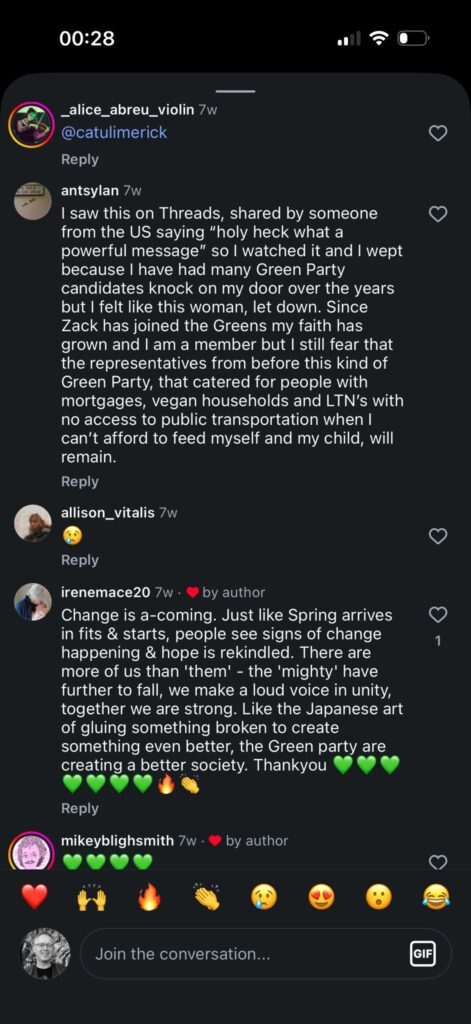
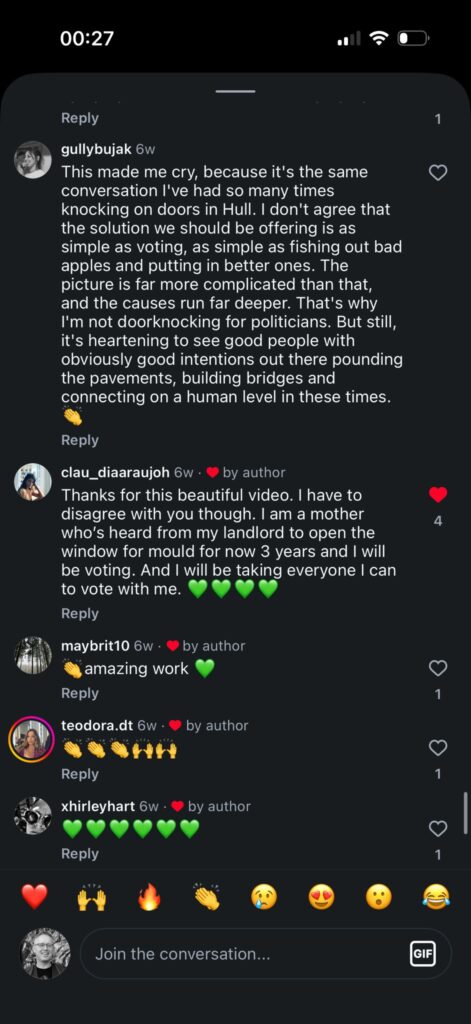
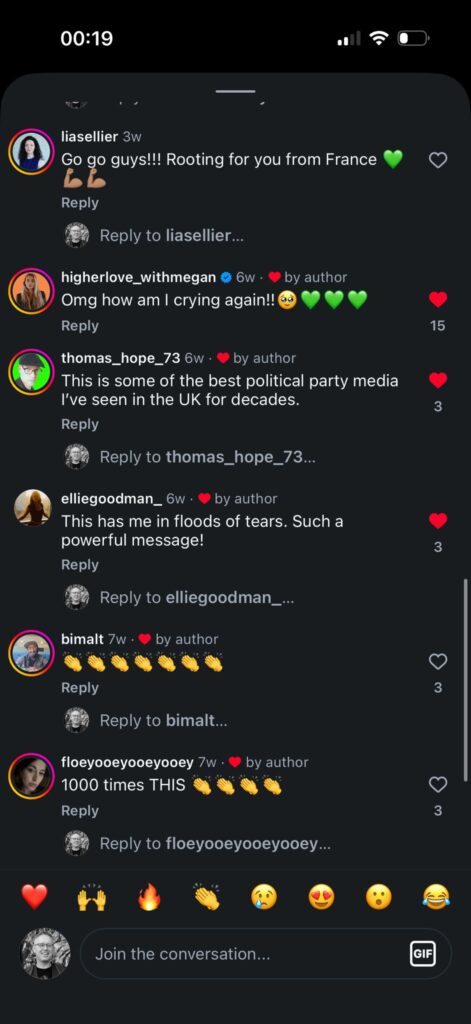
The film became the highest-performing piece of content in the campaign. But the detail that stays with me is this: canvassers were hearing it quoted back to them on the doorstep. People who had never met Zoë felt like they knew her. That’s what finding the right frequency does. It travels.
On 8 May, Zoë became the first elected Green mayor in English history.
The part nobody tells you
The process only works if you bring people into it. Not just the willingness to get lost, but the obligation to explain why getting lost is the point. I never did that with the client I lost. I asked him to trust something I hadn’t made legible. That wasn’t a process failure. It was a failure of care. Writing this has helped me see that.
Political message-box culture is exhausted. Voters know it. Most people in this industry know it too. We just have to be willing to feel our way off road.
Anyway. That’s my case for the defence of dithering.
If it doesn’t communicate, it isn’t comms
Two sharp blog posts a month — sign up or miss out.
Thank you!
You have successfully joined our subscriber list.